Steam rises from a hot bowl. The rich scent hits your nose. You feel that warm comfort deep in your bones. Ramen and pho stand as kings of noodle soups from Asia. They warm you on cold days and spark joy at any meal. Both draw crowds worldwide, but which one truly rules the bowl?
This piece pits ramen against pho in a fair fight. We compare their broths, noodles, toppings, and more. By the end, you will know which soup claims the crown based on taste, culture, and ease.
The Foundation: A Deep Dive into Broth Chemistry
Broth forms the heart of any great noodle soup. It sets the tone for the whole dish. Ramen and pho shine here, each with unique tricks up its sleeves.
Ramen Broth: Umami Depth and Complexity
Ramen broth packs a punch of savoury goodness. It builds layers of flavour that linger on your tongue. Think of it as a bold hug in liquid form.
Tare: The Soul of Ramen
Tare acts as the secret sauce for ramen. This thick seasoning base gives each bowl its personality. Chefs mix soy sauce, salt, or miso to create it.
In Japan, tare varies by region. Coastal areas might lean on seafood extracts for a briny kick. Inland spots use bone stocks for earthier notes. Fermentation plays a big role, too. Some tares age for weeks to deepen the umami. This process turns simple ingredients into something magical. Four main types rule: shio for clear saltiness, shoyu for soy balance, miso for nutty warmth, and tonkotsu for creamy pork power.
The Long Simmer
Ramen broth demands patience. Chefs simmer bones and veggies for hours, often 18 or more. Pork bones for tonkotsu break down into a milky cloud.
You get two styles here. Chintan stays clear and light, like a gentle stream. Paitan turns thick and opaque from all that boiling. Chicken or fish bones add variety in lighter broths. The goal? Extract every bit of flavour without losing balance. This slow cook creates that addictive depth ramen fans crave.
Pho Broth: Aromatic Subtlety and Clarity
Pho broth whispers with gentle spices. It stays clear and inviting, letting aromas shine. You sip it and feel a light lift.
The Spice Profile
Spices define pho, especially in pho bo with beef or pho ga with chicken. Star anise leads with its sweet liquorice edge. Cinnamon adds warmth, cloves bring sharpness, and charred ginger with onion gives smokiness.
Vietnamese cooks simmer these low and slow. This pulls out oils without muddying the stock. Hours on the stove, often overnight, build nuance. The result? A broth that smells like a spice market but tastes clean.
Flavour Extraction vs. Intensity
Pho aims for bright clarity over heavy punch. Skimming fat keeps it pure. Traditional methods use beef knuckles or oxtail for beef versions.
Contrast this with ramen’s bold push. Pho lets subtle notes dance, not overpower. You notice the ginger’s zing or anise’s hint right away. This clarity makes pho perfect for lighter meals.
Noodle Narratives: Texture and Composition
Noodles make or break the soup experience. They soak up broth and add that satisfying bite. Ramen and pho handle this differently, each with flair.
Ramen Noodles: Alkalinity and Chew
Ramen noodles fight back with a firm chew. They hold their shape in rich broths. You slurp them loud and proud.
Kansui: The Secret Ingredient
Kansui, an alkaline mix, changes everything. It gives noodles their yellow tint and bouncy feel. Without it, they would flop like plain pasta.
Thickness matters too. Straight noodles suit clear shio broths for clean slips. Wavy ones cling to thick miso. Shapes pair with broth types, like thin for tonkotsu to cut the cream. This spring means each bite resists just right.
Fresh vs. Dried Preparations
Fresh noodles, made daily, offer top texture. They cook quickly and stay al dente. Dried ones work in a pinch, but soften faster.
Home cooks often grab packaged food for ease. Yet shops swear by fresh for that perfect snap. The choice affects how the broth coats each strand.
Pho Noodles: Rice Paper Pliability
Pho noodles stay soft and simple. Made from rice, they bend without breaking. They absorb broth like a sponge.
Bánh Phở Composition
Bánh phở uses rice flour and water only. No eggs or fancy bits. This keeps them gluten-free and light.
Flat ribbons slide easily into the bowl. Cooks make them fresh each day in Vietnam. A quick boil turns them tender, not tough. Their simplicity lets the broth star.
Texture Goal: Softness and Absorption
Pho wants noodles that yield to your chopsticks. They soak up spice without turning mushy. This softness contrasts with ramen’s chew.
Imagine silk versus spring coils. Pho noodles hug the broth, blending flavours as you eat. It’s all about that gentle merge.
The Topping Takedown: Meats, Greens, and Accoutrements
Toppings turn a good soup into a feast. They add crunch, richness, and fun. Ramen piles on, while pho keeps it fresh.
Ramen Toppings: Richness and Preparation
Ramen toppings build layers of taste. They come prepped with care. Each one boosts the broth’s power.
Chashu and Ajitama
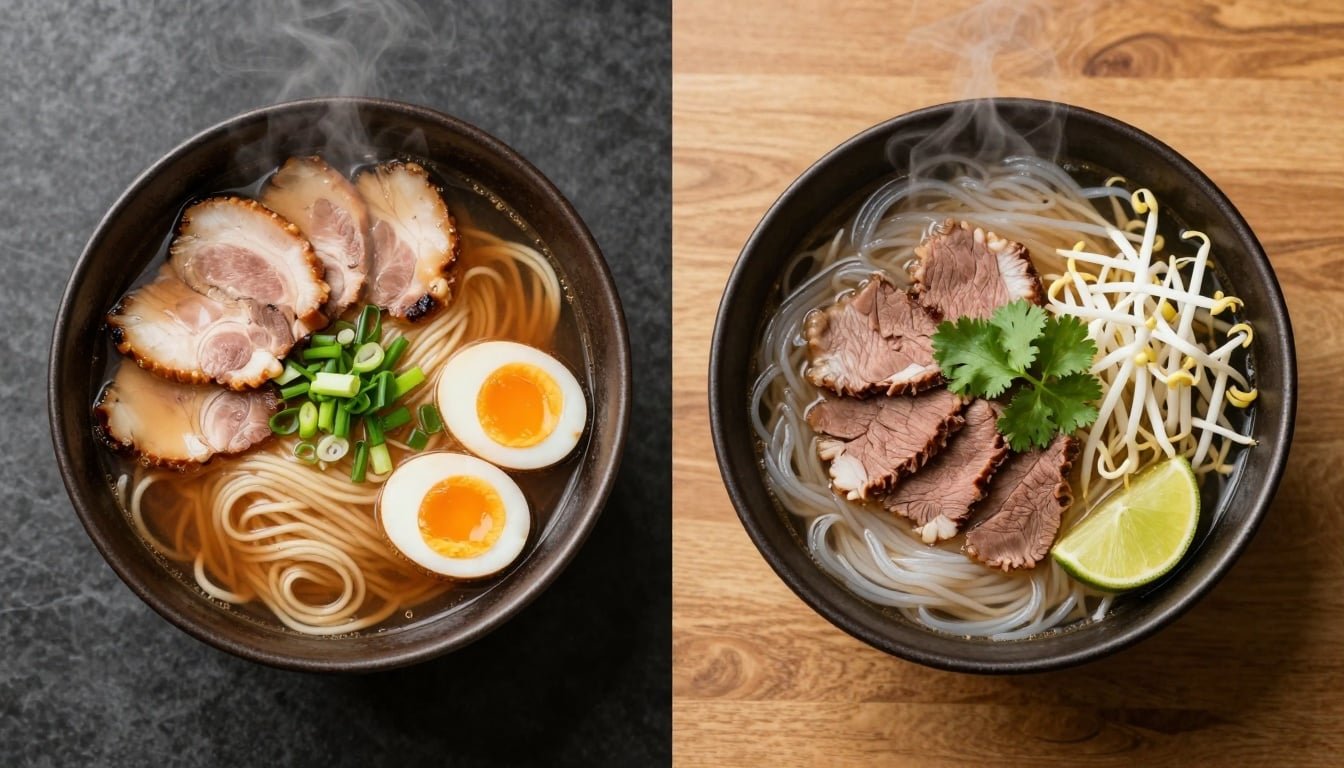
Chashu means slow-braised pork belly. It slices thin and melts in your mouth. Hours in soy and mirin make it tender.
Ajitama, soft-boiled eggs marinated in tare, add creamy yolk. Bamboo shoots crunch beside wood ear mushrooms’ chew. Regional spots vary: Tokyo might add fish cake, Hokkaido corn kernels. These bits make every bowl unique.
Seafood and Vegetable Inclusions
Seafood ramen gets prawns or scallops for sweet pop. Veggies like spinach or leeks balance the fat. Butter in some versions amps creaminess.
Try a veggie-loaded bowl for lighter days. These extras show ramen’s range.
Pho Garnishes: Freshness and Customisation
Pho toppings focus on bright add-ons. You build your bowl at the table. It’s hands-on and personal.
The Fresh Herb Platter
Herbs make pho sing. Thai basil cools, cilantro freshens, culantro sharpens. Bean sprouts add crisp snap.
Pile them in for your perfect mix. This setup lets you tweak heat or tang. No two bowls taste the same.
Condiment Control: Sriracha, Hoisin, and Lime
Sriracha brings fire, hoisin sweetness, lime zing. Squeeze lime first to wake the broth. Dab hoisin light to sweeten beef.
Add sriracha last for controlled heat. This avoids drowning the subtle base. Experiment, but go slow—balance wins.
Cultural Context and Global Reach
These soups carry stories. They spread far from home, adapting along the way. Ramen and pho connect people through food.
Ramen: From Street Food to Michelin Stars
Ramen started as a quick eat in Japan. Now it graces fancy spots.
Regional Japanese Identity
Each prefecture guards its recipe. Fukuoka’s tonkotsu rules with pork intensity. Sapporo miso fights back with bold paste.
Shops like Ichiran in Fukuoka draw lines worldwide. They tweak tare for secret edges. This pride keeps ramen alive and kicking.
Western Adaptation and Innovation
In the West, ramen gets twists. Add cheese or truffles for fusion flair. North America loves spicy vegan takes.
Europe simmers lighter broths. These changes spread the love while honouring roots.
Pho: Vietnamese Tradition and Diaspora Influence
Pho bloomed in Vietnam’s south. Refugees carried it globally.
The Legacy of the South
Southern Vietnam birthed pho as breakfast fuel. Street carts simmer all night for the morning rush. It’s light yet filling for busy starts.
The diaspora spread it post-1970s. Now cities like London boast pho houses.
Global Accessibility and Simplicity
Pho uses easy finds: bones, spices, rice noodles. No days-long boils needed. This makes it quick to scale abroad.
Compare to ramen’s marathon preps. Pho’s straightforward path helps it thrive everywhere.
Conclusion:
Ramen and pho both rule their lanes. Ramen dives deep with umami-rich broths, chewy noodles, and hearty toppings. Pho lifts with clear spices, soft rice strands, and fresh custom tweaks.
No clear winner exists. Crave bold comfort? Ramen wins. Want bright, clean vibes? Pho takes it. Your mood decides the champ.
- Broth: Ramen for intense layers; pho for aromatic clarity.
- Noodles: Ramen’s springy chew vs pho’s soft soak.
- Toppings: Ramen’s rich builds; pho’s fresh freedom.
- Culture: Ramen’s regional pride; pho’s global ease.
Grab a bowl soon. Which one calls to you? Share your pick in the comments. Try both and settle your own debate.