Did you know that a single US fluid ounce is equivalent to approximately two tablespoons? This seemingly small fact can make a big difference when you’re following recipes or measuring ingredients. Understanding the relationship between ounces and tablespoons is essential for anyone who spends time in the kitchen, from amateur bakers to seasoned chefs.
Understanding Volume Measurements
Before diving into the conversion, it’s helpful to understand what ounces and tablespoons represent. Both are units of volume, meaning they measure the amount of space a substance occupies. In the United States, we commonly use fluid ounces for liquids and dry ingredients measured by volume. Tablespoons, often abbreviated as “tbsp,” are smaller units typically used for smaller quantities of ingredients.
The Key Conversion: Ounces to Tablespoons
The most important conversion to remember is the relationship between US fluid ounces and US tablespoons.
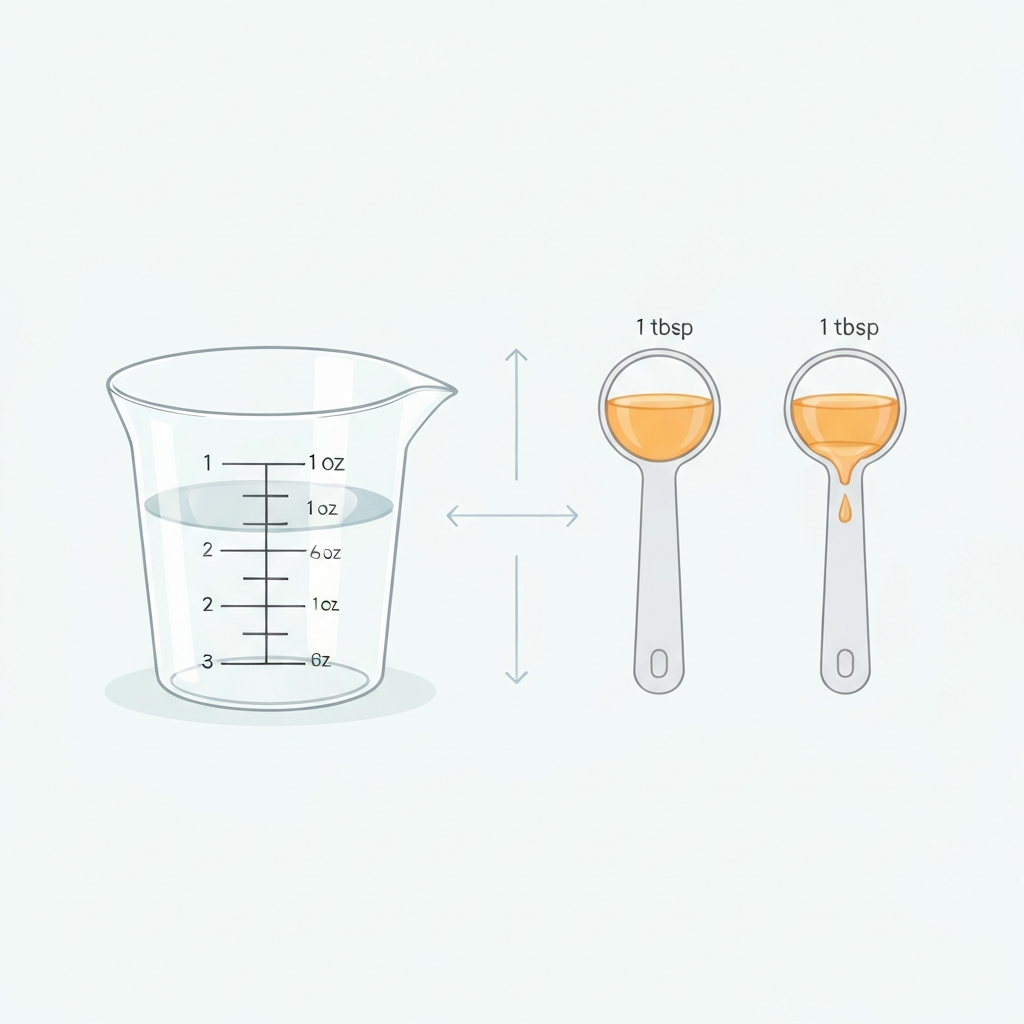
- 1 US fluid ounce = 2 US tablespoons
This means that if a recipe calls for 4 fluid ounces of an ingredient, you would measure out 8 tablespoons. Conversely, if you have 6 tablespoons of something, it’s equivalent to 3 fluid ounces.
Why This Conversion Matters in the Kitchen
Precision in cooking and baking is often the key to success. Using the correct measurements ensures that your recipes turn out as intended. For example, if a recipe for cookies calls for 2 ounces of vanilla extract and you mistakenly measure it as 2 tablespoons, you’ll end up with far too little vanilla, affecting the flavor.
This conversion is also crucial when dealing with recipes from different regions or those that use slightly different measurement systems. While the US system is prevalent in North America, other parts of the world might use metric measurements more frequently. Familiarizing yourself with common conversions, like ounces to tablespoons, bridges these potential gaps.
Dry Ingredients vs. Liquid Ingredients
It’s important to note that while the conversion of 1 fluid ounce to 2 tablespoons generally holds true for both liquids and dry ingredients measured by volume, the density of ingredients can affect weight. For instance, 1 ounce of flour will weigh differently than 1 ounce of sugar. However, when measuring by volume (like with a measuring cup or spoon), the 1 fluid ounce to 2 tablespoon ratio is consistent.
For a more in-depth look at specific conversions, you might find resources on how many tablespoons are in an ounce helpful.
Practical Tips for Measuring
- Use the Right Tools: Invest in a good set of measuring spoons and cups. Ensure they are clearly marked with measurements.
- Level Off: For dry ingredients, level off the excess with a straight edge (like the back of a knife) to ensure accuracy.
- Read Recipes Carefully: Pay attention to whether a recipe specifies fluid ounces or weight ounces. While related, they are not the same. Forbes offers good explanations on this distinction.
- When in Doubt, Convert: If you’re unsure, use the 1 fluid ounce = 2 tablespoon rule as your baseline.
Frequently Asked Questions
How many tablespoons are in a cup?
A standard US cup is equal to 16 tablespoons. This means 1 cup is equivalent to 8 fluid ounces. Understanding this larger conversion helps place the tablespoon measurement in context. For more on cup measurements, you can consult resources like Wikipedia’s page on customary units.
Are US tablespoons and metric tablespoons the same?
No, US tablespoons and metric (often referred to as European) tablespoons are not the same. A US tablespoon is approximately 14.8 milliliters, while a metric tablespoon is typically 15 milliliters. The difference is small but can be significant in precise baking.
What if a recipe calls for “ounces” without specifying “fluid”?
If a recipe simply says “ounces” and doesn’t specify “fluid ounces” or “weight ounces,” it’s often a point of confusion. In many US recipes, “ounces” for ingredients like chocolate or butter refers to weight. However, for ingredients like vanilla extract or oil, it often refers to fluid ounces. If you’re unsure, it’s best to look for context clues in the recipe or consult reliable cooking resources.
Conclusion
Mastering the conversion between ounces and tablespoons is a fundamental skill for any home cook. By remembering that 1 US fluid ounce equals 2 US tablespoons, you can confidently navigate recipes and ensure your culinary creations turn out perfectly. Whether you’re measuring liquids or dry ingredients by volume, this simple conversion will serve you well.